Most membership medicine practices start lean. The physician handles clinical care, a small team covers front desk and nursing duties, and the patient experience falls to whoever has bandwidth on a given day.
That approach works early on. But as a practice grows, patient expectations grow with it. The gap between good service and a five-star experience often comes down to one dedicated role: the patient experience manager.
What a Patient Experience Manager Does
A patient experience manager is the single point of coordination for every non-clinical interaction a patient has with your practice. This person knows each patient’s preferences, tracks follow-up details, and keeps the experience consistent regardless of who’s working the front desk on any given afternoon.
In many Private Physicians Alliance member practices, this role becomes the second-closest relationship a patient has after their physician. The patient experience manager handles scheduling nuances, manages communication between visits, and flags personal details the physician needs to know, like when a patient is going through a difficult time.
The role covers retention, referrals, and the daily execution of your practice’s service standards.
Why Practices Add a Patient Experience Manager
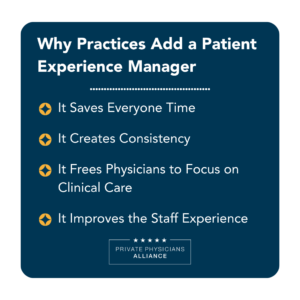
It Saves Everyone Time
Time is the one resource members value most. A dedicated patient experience manager provides patients with a clear point of contact, eliminating the frustration of repeated handoffs and unanswered questions.
On the practice side, the role consolidates patient communication. Staff spend less time fielding questions outside their expertise, and physicians spend less time on operational details between appointments.
It Creates Consistency
Standard operating procedures only work when someone champions them day to day. Practices that hire a patient experience manager typically see more consistent service delivery across every patient touchpoint. The role protects the practice culture by ensuring SOPs are followed, not filed away.
A dedicated experience manager also strengthens the hiring process. This person can help identify candidates who share the practice’s values for hospitality and service, whether they’re scheduling appointments or drawing blood.
It Frees Physicians to Focus on Clinical Care
In smaller practices, the physician often doubles as operations manager, culture keeper, and service quality monitor. That load gets heavier as the patient panel fills.
Adding a patient experience manager lets the physician step back from day-to-day service management. The clinical work gets full attention, and the experience side gets a dedicated advocate.
It Improves the Staff Experience
Not every clinical team member is comfortable with the high-touch hospitality side of membership medicine. A patient experience manager often brings perspective from outside healthcare, sometimes from the hotel or luxury service industry.
This lets clinical staff focus on what they do best. The quality of patient interactions goes up without placing that pressure on team members whose strengths are clinical.
The Cost Tradeoff
The most obvious barrier is salary. For a growing practice, adding a full-time role can feel premature.
The cost of a patient experience manager is a real consideration, but many practices that make the hire report the role more than pays for itself. Patients with a consistent, personal point of contact tend to stay longer and refer more often, both of which directly affect revenue.
The bigger risk isn’t the expense. It’s the assumption that every staff member will naturally prioritize patient experience without someone accountable for it.
When You’re Not Ready to Hire
If the budget isn’t there yet, patient experience training for your existing team is a strong interim step. Choose a program built for membership medicine, not generic healthcare customer service courses.
Investing in patient experience manager-level training prepares your staff to deliver consistent, high-quality interactions at every stage. It also builds a service-minded culture that makes the eventual hire more effective by putting clear standards in place.
Private Physicians Alliance (PPA) members share patient experience strategies, hiring approaches, and service frameworks through private forums and monthly webinars. If you’re looking for a peer network where concierge and DPC physicians openly discuss what’s working in their practices, learn more about PPA membership.