Concierge Medicine vs. Direct Primary Care: A Practical Comparison
Concierge and DPC differ on insurance billing, fees, panel size, and daily operations. A side-by-side comparison of the two membership models and the physician each one fits.

Physicians designing a membership practice run into the same terminology problem right away. Concierge medicine, direct primary care, membership medicine, personalized care: marketing copy and industry press use the labels interchangeably.
The two models differ across pricing, patient mix, panel size, and daily operations. Choosing the wrong label for your practice can misalign patient expectations from the first inquiry call.
This comparison covers the core differences, the current economics, and the physician profile each model tends to fit.
Concierge Medicine vs. Direct Primary Care: The Core Difference
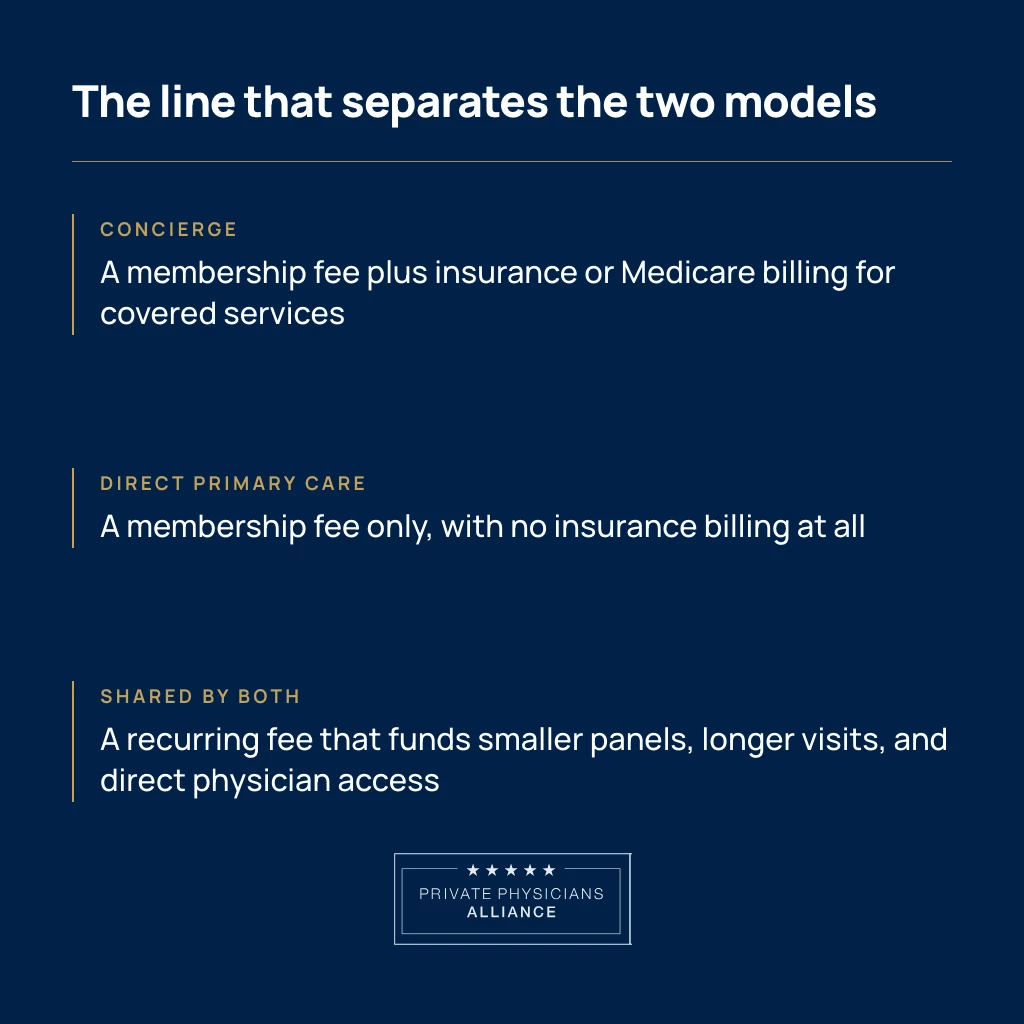
Insurance is the primary dividing line between the two models. Concierge practices typically charge a membership fee and also bill insurance or Medicare for covered services. DPC practices charge a membership fee only and don’t bill insurance at all.
The concierge medicine vs. direct primary care distinction comes down to whether the practice touches insurance revenue at all. That single decision affects billing infrastructure, staffing needs, patient-facing paperwork, and the acuity level a practice can reasonably manage.
Both models share a common foundation: a recurring membership fee that funds smaller panels, longer visits, and direct physician access. Concierge and DPC diverge in how the practice generates the rest of its revenue.
How Concierge Medicine and Direct Primary Care Compare Side by Side
A clear concierge medicine vs. direct primary care comparison helps physicians match the model to the practice they want to build. The table below covers the factors that most often drive that decision.
| Factor | Concierge | Direct primary care |
|---|---|---|
| Insurance billing | Yes, alongside the membership fee | No |
| What the patient pays | $1,500 to $45,000+ per year | $50 to $200 per month |
| Revenue per patient per year | $2,000 to $5,000 | $600 to $1,200 |
| Typical panel size | Under 100 to 600 per physician | 600 to 1,000 per physician |
| Typical overhead | 40 to 50% | 30 to 40% |
| Visit length | 30 to 60 minutes | 30 to 60 minutes |
| Patient mix it tends to fit | Older, higher-acuity, Medicare-eligible | Working-age adults, families, employer contracts |
The ranges above reflect commonly reported figures across US markets and match the benchmarks PPA publishes in its full practice model comparison. Actual numbers vary by geography, panel composition, and the specific services a practice offers.
Some practices operate hybrid variations. A concierge practice may bill Medicare only. A DPC practice may layer wraparound services like functional medicine on top of the base membership.
Which Model Fits Which Physician
Concierge medicine tends to fit physicians who want to keep some insurance relationships intact, serve an older or higher-acuity panel, and offer a broader menu of services under one roof. The higher membership fee supports a smaller panel while insurance reimbursement covers a share of the revenue.
Direct primary care tends to fit physicians who want to exit insurance entirely, keep overhead low, and build a direct financial relationship with each patient. The DPC model works well for physicians serving working-age adults, families, and small businesses that contract for employee coverage.
When weighing concierge medicine vs. direct primary care, start with the patient panel you want to serve, then let the payment model follow. Forcing a payment model onto the wrong panel creates friction in retention and referrals.
What Both Models Have in Common
A recurring membership fee gives both models predictable revenue and aligns patient and physician incentives around outcomes rather than volume. Smaller panels give physicians the time to build the kind of relationships that drive retention and referrals.
Both models require the physician to run a real business alongside the clinical work. Pricing decisions, staff hiring, marketing, and patient experience standards all fall inside the practice owner’s job description.
The choice between concierge and DPC is a design decision, not a values decision. Both models can deliver excellent care when the business fundamentals are right.
PPA members share pricing benchmarks, panel-size decisions, and model-transition experience through private forums and monthly webinars. If you’re weighing concierge medicine vs. direct primary care for your own practice, learn more about PPA membership.